For some of us, "All I Want for Christmas" is the soundtrack to hell (we're looking at you, people who've worked an 8-hour shift at a department store during the holidays). But for the Songbird Supreme, it's the sound of money -- and perpetual relevancy. Today:
Mariah Carey's in her Christmas groove
Your cell phone knows your every move
In Britain, the liquor is going down smooth
The last holiday song to hit #1 on the Billboard Hot 100? "The Chipmunk Song (Christmas Don't Be Late)." Life was a different beast back in '58.
Mariah Carey is the Queen of Christmas -- and 21st century marketing. Bend the knee.
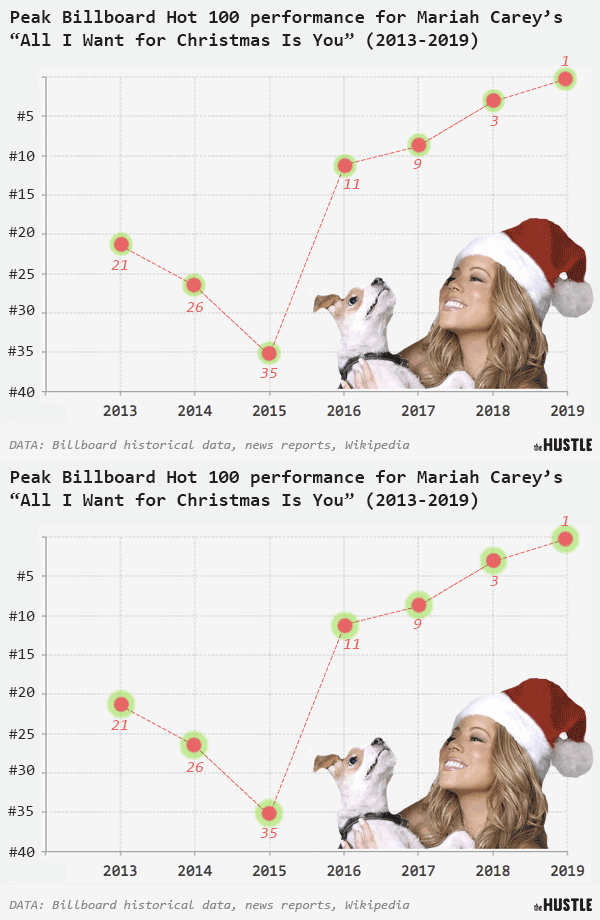
This week, "All I Want for Christmas Is You," released in 1994, reached No. 1 on the Billboard Hot 100 for the first time.
The accomplishment cements Carey as not only the most successful individual artist of all time -- she has 19 No. 1 singles, placing her 1 spot ahead of Elvis -- but as a pioneer in building a genuine and digitally savvy relationship with fans.
She's the savviest of the season
"All I Want for Christmas Is You" is expected to net Carey ~$600k this year and some $60m since its release (as of 2016).
Her push to get the track to the top began after a Nov. 1 tweet. Carey posted a video that begins with her falling asleep on a sofa in her glam rocker costume. She receives a phone call from Santa as the opening notes of "All I Want for Christmas Is You" play in the background.
Celebratory Carey stories appeared in USA Today and TIME that same day, and soon an Amazon trailer dropped for a mini-doc about the song.
And it was just 2 years ago when Carey was roasted for her New Year's Eve performance in Times Square.
But the Lambs never gave up
Know how Beyonce has the Beyhive and Lady Gaga has the Little Monsters? Before every female pop icon -- and even the lesser stars -- named their fan bases, Carey had the Lambs. They sprung up around the time Carey was diagnosed with bipolar disorder in 2001, and when her (underrated!) album "Glitter" flopped.
As music has shifted from albums to online, the Lambs carried her into the new era. They've made Mariah a social media mainstay, from "Skinny Legend" to #JusticeForGlitter, and this year helped the #ObsessedChallenge go viral on TikTok.
It was the Lambs who pushed "All I Want for Christmas Is You" to No. 1. The campaign actually began last year, when the song reached No. 3.
When it got to No. 1 this week, Carey tweeted, "We did it."
SPONSORED
This was just named CNBC's Best Travel Card
Everyone's favorite credit card expert Greg Go is back, and this week he's bringing us the deets on a card that was just named one of the best around for travel. Turn those miles into memories with…
50,000 bonus miles offer (a $500 value)
5X miles on hotels and car rentals at Capital One Travel
Unlimited 2X miles on every purchase, every day
Miles are redeemable on any airline, hotel, rental car, or travel site
Up to 108,000 miles available during the first year (a $1,080 value)
We may not have Greg's credentials, but we know a card that's going places when we see one. Learn how to score one of your own and start stacking up the miles today.
Reminder: Your phone is tracking your every move (and the data isn't so anonymous)
Yesterday, the NYT published a bombshell report on the smartphone tracking industry. And not to sound the alarm bell, but it should freak you out at least a little bit.
An unnamed source gave the Times a massive trove of location data from 12m cell phones -- more than 50B "pings" in total, registered in places ranging from the White House to seedy LA motels.
But it's not so anonymous, after all
Many cell phone apps -- weather utilities, maps, and services that don't need your location at all -- collect, and sometimes sell, location data harvested from your phone through software developer kits. Sometimes, these companies collect this data up to 14k times per day.
The companies that collect this data often argue that it is 100% anonymous. But this isn't really the case.
The NYT was able to easily identify individuals -- including state officials, celebrities, and cops -- by tracing location data patterns. Sometimes, the data revealed sensitive information, like a trip to an abortion clinic.
Previous studies have shown that the "anonymity" of location data is mitigated by its precision: In one case, MIT researchers were able to identify 95% of users in a similar data set.
Here's how you can improve your privacy
Luckily, there is a way for you to limit apps' ability to collect your location data (note that turning off this data will affect the performance of certain location-dependent apps, like weather and maps). Here's how:
On iOS: Settings → Privacy → Location Services → Set all apps to "Never"
On Android: Settings → Security & location → Location (under "Privacy" section) → App-level permissions → Toggle location data on/off
If this doesn't work, you can always follow this author's course of action: Throw your phone off a bridge and move to the woods.
Brexit could be good news for... pubs?
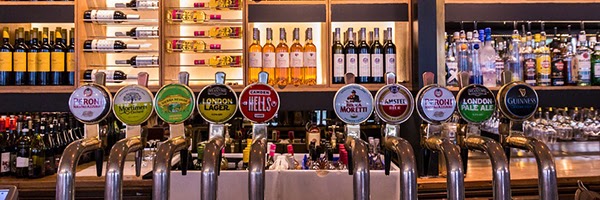
The beloved UK pub industry took a hit during the 2010s. On average, the number of pubs dropped by 732 each year. Until this year, that is, when the Office of National Statistics reported the first net gain -- of 320 pubs -- in a decade.
Experts have attributed the increase to improved food offerings, added events, and accomodations.
The gain may be a blip rather than the start of a trend, unless regulations involving business and alcohol taxes are changed.
Last week's Conservative Party victory may bring policies that help pubs. Boris Johnson's party has floated a £150m plan to assist local groups looking to buy and operate neighborhood pubs facing closure.
But despite the Tory victory, a "no-deal" Brexit may be here before you can say… Bollocks, I'm utterly knackered!
And a "no-deal" Brexit could slash the eating-out market in the UK by £5.4B. That's bad news for pubs.
A "no-deal" Brexit, however, also means progressive Britons will likely be seeking liquid comfort.
This week's Signal
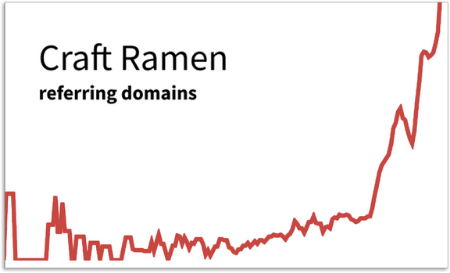
Craft Ramen
Instant noods conjure up memories of late college nights on a budget. "Broth" that's essentially salty water paired with flash-fried noodles were a recipe for survival, rather than an enjoyable meal.
People are instead looking for ramen in a less mechanized way, with ingredients you can actually pronounce. Similar to the airplane cocktail kit Signal we told you about this fall, there's just one major direct-to-consumer player in craft ramen, despite 2.4k searches per month.









Nenhum comentário:
Postar um comentário